

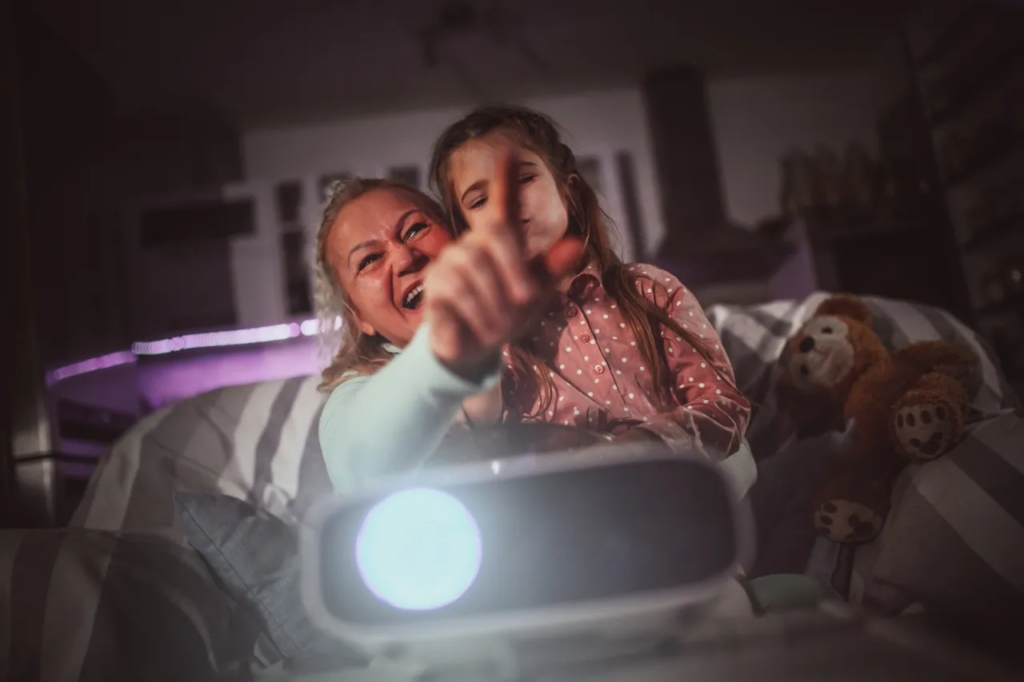
Step Into the Big Picture: The Rise of Immersive Home Entertainment
Home entertainment has evolved far beyond the living room TV. With advancements in display technology and shifting consumer preferences, more viewers in Mavelikkara and across Kerala are reimagining how they experience movies, sports, and gaming. The traditional TV setup, once the centerpiece of every home, now faces strong competition from projectors offering cinematic scale and immersive depth at accessible price points. As demand grows for theater-like experiences without leaving home, projectors are stepping into the spotlight—literally.
This shift isn’t just about size—it’s about atmosphere. Whether you’re transforming a spare room into a private screening lounge or setting up an outdoor movie night under the stars, projectors deliver flexibility and impact that flat screens often can’t match. From higher perceived screen dimensions to seamless integration with surround sound systems, the immersive potential is undeniable.
In this post, you’ll discover how projectors compare to TVs in real-world home environments, explore key considerations like ambient light and room layout, and learn practical tips for getting the best image quality. You’ll also gain insights into setup simplicity, maintenance, and total cost of ownership—so you can make a confident, informed decision tailored to your viewing lifestyle.
Experience Bigger, Better Viewing: Top 5 Advantages of Projectors Over TVs
- Massive Screen Size Without the Price Tag
Transform any wall into a cinematic display with projectors offering screen sizes 100 inches and beyond—far exceeding most consumer TVs. This immersive experience enhances movie nights, gaming, and sports viewing, especially in spacious living rooms or home theaters across Mavelikkara and other Kerala regions. Unlike large-format TVs, which escalate in cost dramatically with size, projectors deliver giant visuals at a fraction of the price. - Cost-Efficient Long-Term Entertainment
Projectors provide superior value by combining high-quality UHD or 4K visuals with lower total ownership costs. With no need for expensive hardware upgrades every few years, and affordable replacement lamps or LED light sources lasting thousands of hours, they outperform flat-screen alternatives over time. - Portability and Flexible Setup
Ideal for dynamic living spaces, projectors are lightweight and easy to move between rooms or even outdoors. Host backyard screenings in Mavelikkara neighborhoods or shift your viewing setup seasonally without rewiring or wall mounts. - Reduced Eye Strain and Ambient Light Adaptability
Many modern projectors use diffuse reflection technology, which is gentler on eyes than the direct LED backlighting of TVs. Paired with dark drapes or ambient light-rejecting screens, they maintain clarity even in semi-lit environments. - Seamless Integration with Smart Home Systems
Today’s projectors support HDMI, Wi-Fi, Bluetooth, and smart streaming, making them compatible with existing audiovisual setups. Use them alongside soundbars or home audio systems for a fully customized, theater-like experience in any Kerala household.
Transform Your Living Room into a True Home Theater
Experience the magic of the movies without leaving your home by choosing a projector over a traditional TV. Projectors excel at creating an immersive cinematic atmosphere, making every viewing feel like a premiere night. Unlike standard flat-panel TVs, projectors can deliver massive screen sizes—often exceeding 100 inches—that fill your field of vision and pull you into the story.
Ambiance plays a key role in maximizing your viewing experience. To optimize picture quality, control ambient light with blackout curtains or dimmable lighting, especially for rooms in Mavelikkara or other areas with strong natural sunlight. Darker room interiors enhance contrast and color depth, making explosions in action films or nighttime scenes in dramas appear more lifelike.
When setting up your space, consider ceiling mounting the projector for a clean, space-saving installation. Position the screen opposite seating at an optimal distance—roughly 1.5 to 2 times the screen’s diagonal size—for comfortable viewing. Acoustic-treated walls or rugs can further elevate the experience by improving sound clarity. With thoughtful lighting, layout, and screen placement, a projector turns any dedicated room or entertainment area in Kerala or beyond into a personalized cinematic retreat.
Image Quality Face-Off: Projectors vs High-End TVs
When deciding between a projector and a high-end TV, image quality, resolution, and brightness are critical deciding factors—especially for viewers in regions like Mavelikkara or across Kerala, where ambient lighting and viewing environments vary. Modern 4K TVs deliver sharp detail, deep contrast ratios, and vibrant colors thanks to OLED or QLED technology, making them ideal for well-lit living rooms and dedicated media spaces. They maintain consistent brightness across the screen, typically ranging from 500 to over 1,500 nits, ensuring clarity even in daylight.
Projectors, on the other hand, have made significant strides. Many now support native 4K or pixel-shifted 4K resolution, delivering cinema-like sharpness on screens exceeding 100 inches. However, brightness is measured differently—projectors use lumens instead of nits. A high-quality home projector offers 2,000 to 3,000 lumens, sufficient for dimly lit rooms but may struggle in bright environments unless paired with ambient light-rejecting (ALR) screens.
Key considerations:
- Contrast: TVs excel with true blacks; projectors rely on room darkness for optimal contrast.
- Screen Size Flexibility: Projectors provide larger images cost-effectively.
- Viewing Environment: Projectors work best in controlled lighting, while TVs handle variable light better.
For immersive, theater-grade experiences in dedicated spaces, projectors lead. For reliable, all-day clarity in multifunctional rooms, high-end TVs remain the standard.
Clearing the Air: Solving Projector Myths About Noise, Maintenance, and Space
Many consider projectors but hesitate due to misconceptions around noise, upkeep, and room requirements. The good news? Modern technology and smart setup choices make these concerns far more manageable than most realize.
Audible fan noise is a common worry, especially for immersive movie nights. However, newer projectors are engineered with quiet-cooling systems, operating as low as 28dB—comparable to a whisper. Placing the unit slightly farther from seating areas or mounting it in a ceiling enclosure can further reduce perceived sound, especially in medium-sized living rooms in Mavelikkara or similar residential spaces.
Maintenance is simpler than many assume. Unlike older models, today’s projectors often have long-life LEDs or laser light sources lasting 15,000 to 30,000 hours—requiring no bulb replacements for years. Just keep vents dust-free with occasional soft brushing and avoid high-humidity areas to preserve internal components.
As for space, projectors don’t demand large rooms. With short-throw models, you can project a 100-inch image from just a few feet away—perfect for compact Kerala apartments. Pair with ambient light-rejecting screens to maintain clarity even in moderately lit environments. With the right setup, your living room, bedroom, or even balcony can transform into a personal theater.
Projector vs TV: Your Top Questions Answered
Is a projector as durable as a TV?
Projectors can be highly durable when properly maintained. While TVs typically have longer lifespans due to static components, modern projectors feature long-life lamps or LED light sources that last thousands of hours. Avoiding dust buildup, ensuring proper ventilation, and using surge protectors significantly extend a projector’s lifespan—especially in humid climates like KL or Mavelikkara.
How difficult is projector installation compared to mounting a TV?
Projector setup requires more planning than TV mounting. You’ll need to consider throw distance, ceiling or shelf placement, screen alignment, and cable routing. However, with a fixed-install or ceiling-mounted bracket, once configured, it’s as permanent and seamless as any wall-mounted TV. For renters or those avoiding drilling, short-throw projectors offer flexible tabletop placement.
Can I use a projector every day, like a TV?
Yes—many projectors are designed for daily use. LED-based models generate less heat and have longer lifespans, making them ideal for households in Kerala using them for movies, news, or kids’ content. Just allow cooldown time after extended use and avoid rapid power cycling to maximize longevity.
Do projectors work in bright rooms?
Traditional projectors need controlled lighting, but high-lumen models (2,500 lumens or more) perform well in ambient light. Pair with an ambient-light-rejecting (ALR) screen in sunlit rooms for optimal contrast. In Mavelikkara homes with large windows, positioning matters—use blackout curtains or schedule viewing during less sunny hours.
Are projectors better for large-family viewing?
Absolutely. Projectors deliver 100+ inch screens at a fraction of the cost of large TVs, enhancing group viewing comfort. Whether gathering for festivals or sports, a big screen improves visibility for all seating positions—ideal for open-plan homes across Kerala.
What about maintenance and cleaning?
Dust is a projector’s main enemy. Clean air filters monthly and store in a sealed media cabinet if possible. Wipe lenses gently with microfiber cloths. Unlike TVs, avoid touching internal components—when in doubt, consult a technician familiar with optical systems.
Projector Power: A Wiser Long-Term Entertainment Investment
For entertainment lovers seeking immersive experiences without frequent upgrades, a projector often outshines traditional TVs as a smarter long-term choice. While flat-screens dominate living rooms, projectors deliver unmatched value through flexibility, scalability, and cost-efficiency over time. Instead of replacing a TV every few years to achieve larger screen sizes, a single high-quality projector can transform any wall into a 100+ inch display—ideal for movie nights, gaming, or sports marathons—without requiring structural changes or additional hardware investments.
Unlike fixed TVs, projectors adapt to various environments and uses. With advancements in brightness, resolution, and lamp life, modern models maintain excellent picture quality even in ambient light, making them suitable for multi-purpose rooms in homes across Mavelikkara and other urban or semi-urban areas. Maintenance is minimal, and LED or laser light sources can last up to 20,000 hours, reducing long-term operating costs.
Consider these practical next steps: assess your viewing space, measure throw distances, and determine ideal screen size based on seating. Test ambient light levels and explore affordable acoustic treatments to enhance audio. When ready, compare specs like lumens, contrast ratio, and native resolution to match your needs.
Upgrade your entertainment mindset—invest in a solution that grows with you. Start exploring projector setups today and turn any room into a personalized theater.